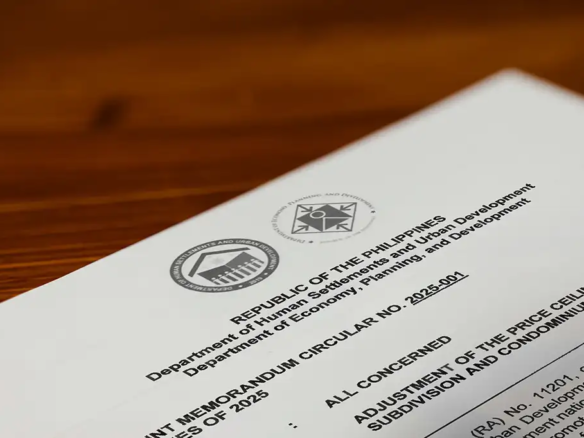
The Expanded 4PH Program requirements continues to evolve as one of the government’s key initiatives to address the country’s housing backlog. On March 18, 2026, the National Real Estate Association (NREA) hosted an online forum titled “Guidelines and Policy Updates on the Expanded 4PH Program.” The event brought together developers, financial institutions, and government agencies to align on the latest policies and implementation strategies. As housing demand continues to grow, understanding these updates is essential for both homebuyers and industry stakeholders.
NREA National President Maria Lorena Sales opened the forum by emphasizing the importance of collaboration in making housing more accessible to Filipino families. She highlighted the role of Pag-IBIG Fund and the Department of Human Settlements and Urban Development in delivering safe, secure, and dignified homes. The message was clear: the success of the Expanded 4PH Program Philippines depends on strong coordination between government and private sector partners.
Understanding the Housing Demand in the Philippines
The urgency behind the Expanded 4PH Program Philippines was reinforced by Director Roel B. Ugaban of the Expanded 4PH Project Management Office. While earlier studies estimated the housing backlog at around 6.5 million units, current projections indicate that at least 2.9 million housing units will still be needed by 2028.
This gap highlights the importance of scaling housing production while maintaining affordability. For buyers, it means more opportunities to access government-supported housing. For industry professionals, it signals continued demand across various market segments.
Shift to Multi-Modal Housing Solutions
A major update in the Expanded 4PH Program Philippines is the transition from a vertical-only approach to a multi-modal housing framework. This allows the program to address different housing needs more effectively.
The program now includes horizontal housing, rental housing, High-Density Housing (HDH), and Temporary Housing such as Modular Shelter Units (MSUs) for disaster-affected communities. This flexibility ensures that housing solutions can adapt to different income levels, locations, and lifestyle needs.
By expanding the types of housing available, the Expanded 4PH Program Philippines creates more options for Filipino families. It also enables developers to participate in a wider range of projects that align with market demand.
Beneficiary-Centric Financing for Greater Accessibility
One of the strongest features of the Expanded 4PH Program Philippines is its focus on affordability. The program is designed to support households within the 1st to 7th income deciles, making homeownership more inclusive.
For lower-income groups, government support significantly reduces borrowing costs. Through a combination of interest subsidies and financing assistance, the effective interest rate can go as low as 1% for qualified beneficiaries. This makes it easier for more Filipinos to transition from renting to owning their own homes.
These financing improvements play a critical role in making the Expanded 4PH Program Philippines accessible to a broader segment of the population.
Accelerating Housing Delivery and Project Implementation
The government has set a target of delivering 1.133 million housing units by June 2028 under the Expanded 4PH Program Philippines. As of early 2026, nearly 500,000 units have already been completed or are under development.
To support this goal, Director Gilbert L. Sebastian discussed reforms aimed at improving efficiency in project implementation. The NEHEMIA approach focuses on streamlining regulatory processes, reducing approval timelines, and enhancing coordination among agencies.
These changes accelerate housing delivery, moving projects faster from planning to completion. Faster project timelines benefit both buyers and developers, ensuring that housing supply can keep pace with demand.
Pag-IBIG Fund: Strengthening Financing Support
The Pag-IBIG Fund remains a central pillar of the Expanded 4PH Program Philippines, providing accessible financing options to homebuyers and developers. Engineer Richard M. Roque shared key updates on financing programs available under the initiative.
Eligible homebuyers can avail of housing loans with interest rates as low as 3% fixed for the first five years. An early bird program extends this rate to ten years for the first 30,000 borrowers, offering greater affordability and stability.
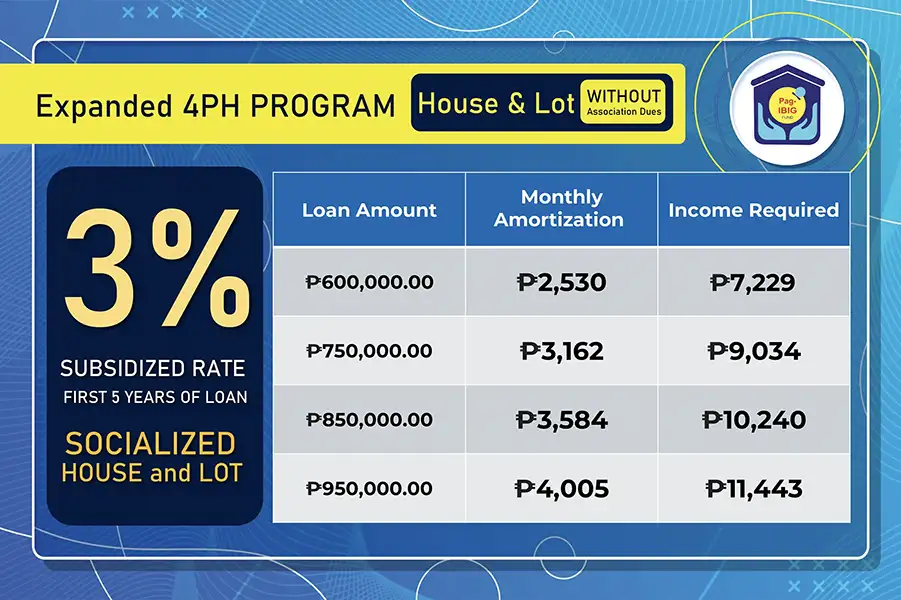
To demonstrate the impact of the program, sample affordability computations were presented. A house and lot valued at ₱950,000 would have an estimated monthly amortization of ₱4,521, requiring a gross monthly income of ₱12,917.
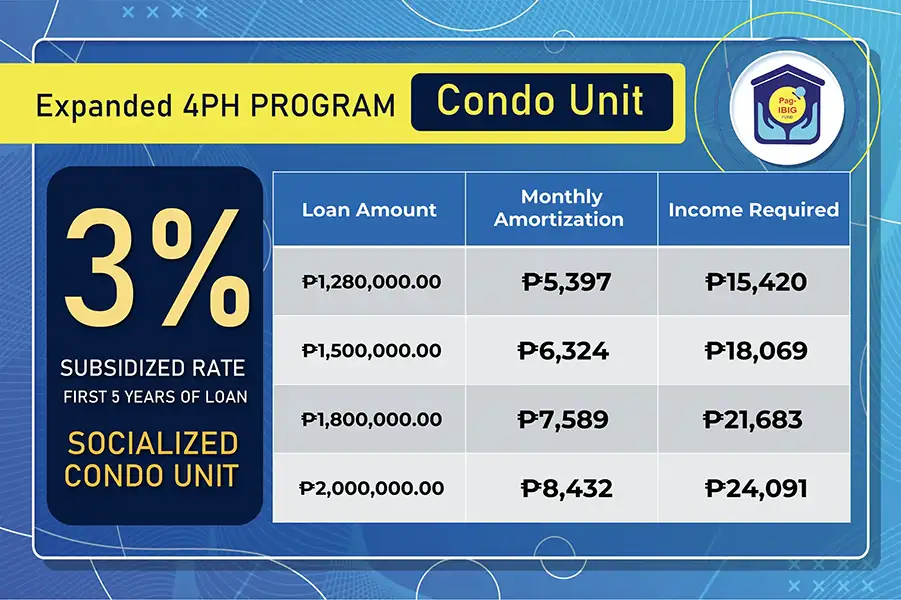
Meanwhile, a ₱2 million condominium unit would result in a monthly amortization of approximately ₱9,398, with a required income of ₱26,809.
These figures highlight how the Expanded 4PH Program Philippines makes homeownership more achievable for a wider range of Filipinos.
The Expanded 4PH Program creates opportunities for Filipinos to own homes faster. It offers improved financing, diverse housing options, and accessible pathways to property ownership. Whether you are a first-time buyer or looking to invest in property, the program provides more accessible pathways to homeownership.
Navigating these opportunities can be complex, especially with different financing options and eligibility requirements. Experienced Philippine real estate brokers can help you understand your options and make informed buying decisions.